How to Encourage Your Kitten to Start Playing
Bringing home a new kitten is exciting, but not every kitten dives straight into playtime. Some kittens are naturally curious and pounce on anything that moves, while others seem shy, sleepy, or uninterested in toys altogether. If your kitten isn’t playing much yet, don’t worry — with the right approach, patience, and a bit of creativity, you can help them discover the joy of play. This guide walks you through practical, vet-informed tips to get your kitten engaged, active, and having fun.
Why Play Matters for Kittens
Play isn’t just about fun — it’s essential for your kitten’s physical and mental development. Through play, kittens:
- Build muscle strength and coordination needed for running, jumping, and climbing
- Practice hunting instincts like stalking, pouncing, and chasing
- Learn social boundaries, especially bite inhibition if they play with littermates or humans
- Reduce stress and anxiety by burning off excess energy
- Strengthen the bond between kitten and owner
A kitten that doesn’t play enough may become overweight, bored, or prone to destructive behaviors like scratching furniture or biting excessively. Encouraging healthy play habits early sets the foundation for a happy, well-adjusted adult cat.
Common Reasons a Kitten Won’t Play
Before trying new techniques, it helps to understand why your kitten might be reluctant:
- They’re adjusting to a new environment. Kittens fresh from a shelter or breeder often need days or weeks to feel safe enough to relax and play.
- They’re tired or overstimulated. Kittens sleep 16–20 hours a day; timing matters.
- They haven’t found the right toy yet. Not all kittens respond to the same stimuli.
- They’re feeling unwell. A sudden lack of interest in play can sometimes signal illness — worth a vet check if it persists.
- They’re naturally more reserved. Just like people, some kittens have quieter personalities.
Tips to Encourage Your Kitten to Play
1. Start with Low-Pressure, Short Sessions
Kittens can get overwhelmed easily. Begin with short play sessions of just 5–10 minutes, a few times a day, rather than one long session. Let your kitten set the pace, and never force interaction — sit nearby, dangle a toy gently, and let curiosity take over.
2. Mimic Prey Movement
Cats are hardwired to respond to movement that resembles prey. Instead of waving a toy directly at your kitten, try:
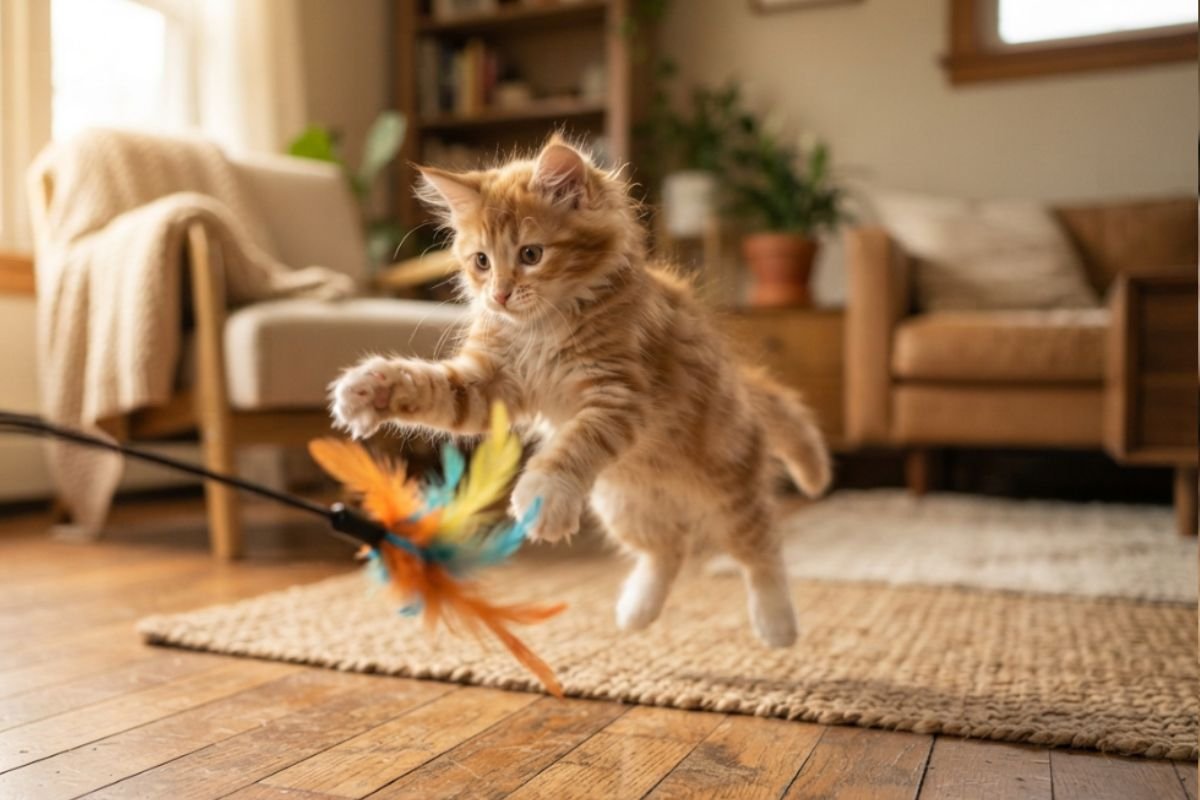
- Dragging a feather wand along the floor in short, jerky bursts
- Hiding a toy partially under a blanket or rug and wiggling it
- Pausing occasionally to mimic a “resting” prey animal, then moving again suddenly
This unpredictable, prey-like motion is far more enticing than a toy waved in the air.
3. Experiment with Different Toy Types
Every kitten has preferences. Try a variety of toys to see what sparks interest:
- Wand toys with feathers or fabric strips for interactive play
- Crinkle balls or pom-poms that are easy to bat around
- Puzzle feeders that combine food rewards with problem-solving
- Laser pointers (always end the session with a physical toy they can “catch” to avoid frustration)
- Catnip toys for kittens over 3–6 months old, when sensitivity to catnip typically develops
4. Use Food to Spark Interest
If your kitten is food-motivated, incorporate treats into play. Toss a small treat a short distance to encourage chasing, or use a treat-dispensing toy that rewards batting and pouncing.
5. Create a Safe, Enriching Environment
A kitten who feels anxious is unlikely to play. Set up a cozy, quiet space with hiding spots, a scratching post, and vertical territory like a cat tree. Once your kitten feels secure in their surroundings, natural curiosity and playfulness tend to follow.
6. Play at the Right Times
Kittens are most active during dawn and dusk, reflecting their natural hunting instincts. Scheduling play sessions during these windows — and especially before bedtime — can help tire them out and improve sleep for both of you.
7. Involve Another Cat or Kitten (If Possible)
If you have another cat, supervised interactive play between them can encourage a hesitant kitten to join in, especially if the other cat is playful and gentle.
8. Be Patient and Consistent
Some kittens take longer than others to warm up to play. Keep offering short, positive opportunities daily without pressure. Celebrate small wins — a single swat at a toy is progress.
What to Avoid
- Don’t use your hands or fingers as toys. This teaches kittens that biting and scratching human skin is acceptable play.
- Don’t force play when your kitten is hiding or stressed. Let them come to you.
- Don’t overdo laser pointers alone. Without a “catchable” toy at the end, kittens can become frustrated since they never get to complete the hunting sequence.
When to Consult a Vet
If your kitten shows a persistent lack of energy, appetite changes, or complete disinterest in play for more than a few days — especially alongside other symptoms like lethargy or hiding — it’s worth scheduling a veterinary check-up to rule out illness.
Final Thoughts
Encouraging a kitten to play is really about tapping into their natural instincts, offering the right kind of stimulation, and giving them the time and space to feel comfortable. With patience, variety, and a little trial and error, most kittens will soon be pouncing, chasing, and batting their way into becoming the playful companions you were hoping for.