
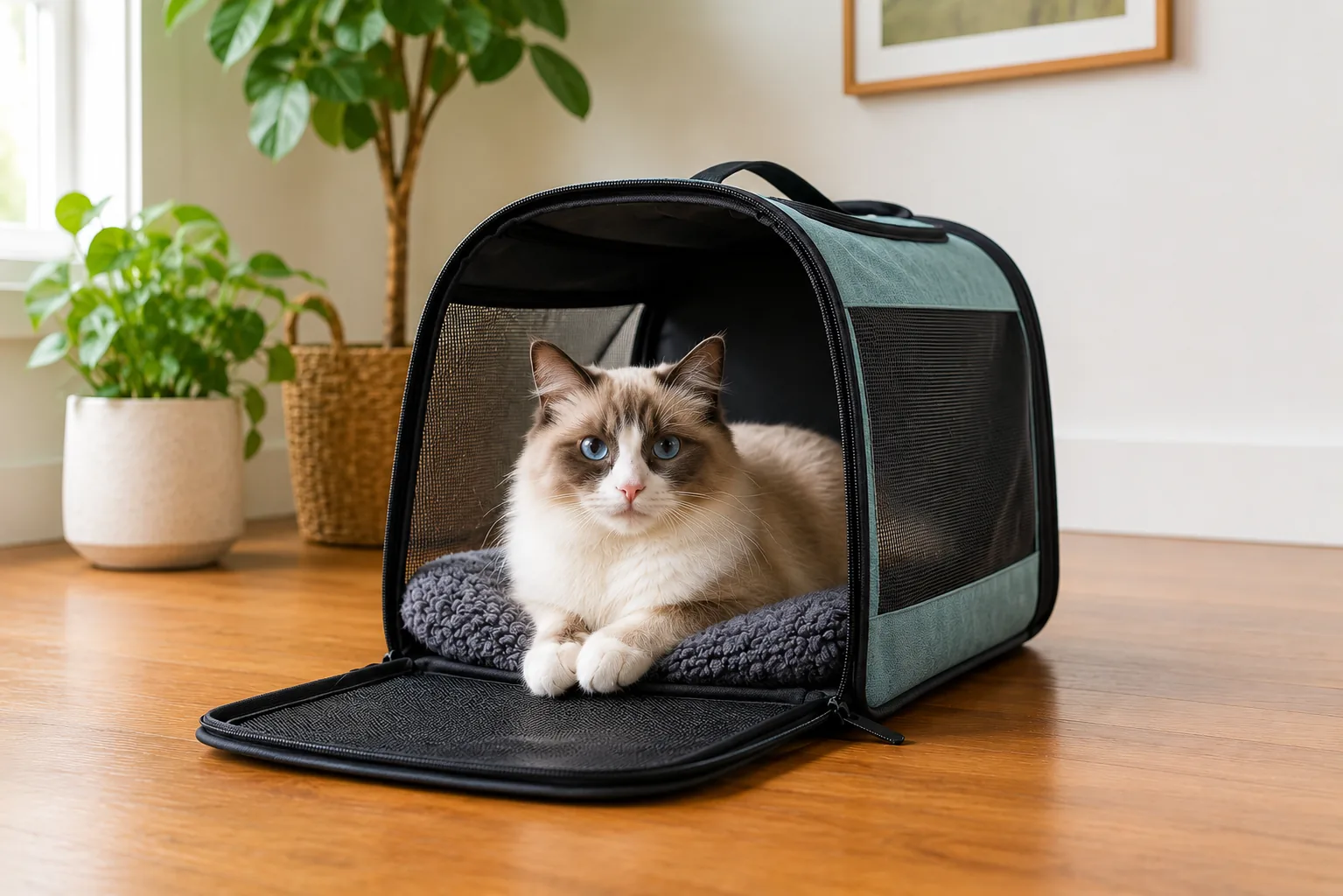
How to Get Your Cat Used to Their Carrier (Step-by-Step Guide)
For most cats, the sight of a carrier means only one thing: a trip to the vet. That single association is enough to turn a calm, affectionate cat into a hissing, hiding ball of stress the moment the carrier comes out of the closet.
The good news is that this reaction isn’t permanent. With a little patience and the right approach, you can teach your cat that the carrier is a safe, neutral part of their everyday environment rather than a warning sign of something scary.
This guide walks through why cats fear carriers in the first place, and a simple, proven method to change that — so your next vet visit, flight, or move is far less stressful for everyone involved.
Why Cats Hate Their Carriers
Cats are territorial animals who feel safest in familiar, open spaces where they can see what’s coming. A carrier works against almost every instinct they have:
- It only appears occasionally, usually right before something unpleasant happens (a car ride, a vet exam, a loud waiting room).
- It’s an enclosed space a cat can’t easily escape from, which can trigger a fear response.
- It smells unfamiliar if it’s been sitting in storage for months between uses.
Because the carrier is so rarely seen — and almost always tied to stress — cats quickly learn to associate it with danger. Breaking that link is the whole goal of carrier training.
Choose the Right Carrier First
Before training begins, make sure the carrier itself isn’t part of the problem:
- Hard-sided carriers with a top-opening lid tend to work best, since they let you lift a stressed cat out from above instead of dragging them through a small front door.
- Size matters — your cat should be able to stand up, turn around, and lie down comfortably inside.
- Stability helps — a carrier that wobbles or feels flimsy on a table can make a nervous cat even more uneasy.
Step 1: Make the Carrier Part of the Furniture
The single most effective thing you can do is stop putting the carrier away. Leave it out permanently in a room your cat spends time in — a living room corner or a quiet bedroom works well.
- Take the door off, or prop it open securely so it can’t swing shut and startle your cat.
- Add a soft blanket or towel inside, ideally one that already smells like your cat.
- Let it sit untouched for several days to a couple of weeks so it stops being a novelty and simply becomes another object in the room.
Step 2: Build a Positive Association
Once the carrier is a normal fixture, start pairing it with things your cat already loves.
- Feed meals near, then inside, the carrier. Start by placing the food bowl a few feet away, and gradually move it closer over several days until it’s just inside the entrance.
- Toss treats inside during play sessions so your cat wanders in and out on their own terms.
- Add favorite toys in or around the carrier during regular playtime.
The goal is for your cat to start entering the carrier voluntarily — to nap in it, eat in it, or simply hang out in it — without any pressure from you.
Step 3: Practice Short, Calm Closures
Once your cat is comfortable going in and out freely, it’s time to practice being closed inside for brief periods.
- Wait until your cat walks into the carrier on their own.
- Gently close the door for just 5–10 seconds, then open it again and offer a treat.
- Over several sessions, extend the time in small increments — a few minutes, then longer.
- Always end on a calm, positive note, and never force your cat inside.
Step 4: Practice Carrying and Short Rides
Comfort with a closed carrier is only half the job — your cat also needs to get used to being lifted and moved.
- Practice picking up the carrier and walking a short distance around the house, then setting it down and letting your cat out.
- Gradually work up to carrying it to the car and taking a short, uneventful drive around the block — not to the vet — so a car ride isn’t always linked to something stressful.
- Keep a calm, quiet tone throughout; cats pick up on anxious energy from their owners.
Extra Tips for Success
- Use pheromone spray. A synthetic feline pheromone spray, applied to the carrier bedding about 15 minutes before use, can help lower anxiety.
- Cover the carrier partially with a light towel during actual travel — reducing visual stimulation often has a calming effect.
- Keep training sessions short. A few minutes a day, done consistently, works better than one long session.
- Never chase or force your cat into the carrier. This undoes progress instantly and reinforces the fear you’re trying to remove.
- Start early, not just before a trip. Carrier training works best as an ongoing habit, not a last-minute fix the night before a vet appointment.
How Long Does It Take?
Every cat is different. A confident, food-motivated cat might feel comfortable with the carrier in a week or two. A more anxious or older cat may need several weeks of slow, consistent exposure. The timeline matters far less than the consistency — regular, low-pressure practice will get almost any cat there eventually.
Final Thoughts
Getting a cat used to their carrier isn’t about a single training trick — it’s about changing what the carrier means to them. By keeping it visible, making it a source of good things like food and treats, and gradually building up to closed doors and short rides, you replace fear with familiarity. The payoff is a calmer cat, an easier vet visit, and a lot less stress for both of you.