How to Litter Train a Kitten: A Complete Step-by-Step Guide
Bringing a new kitten home is exciting, but one of the first things every new cat owner needs to figure out is litter training. The good news? Kittens are naturally inclined to bury their waste, which makes litter training one of the easier parts of raising a cat. With the right setup and a little patience, most kittens learn to use the litter box within just a few days. This guide walks you through everything you need to know.
Why Litter Training Kittens Is Usually Easy
Unlike puppies, kittens don’t need to be taught the concept of using a designated bathroom spot — that instinct is already built in thanks to their wild ancestors, who buried waste to avoid predators. Your job isn’t to teach the behavior from scratch; it’s to show your kitten where that behavior should happen and remove any obstacles that might get in the way.
Step 1: Choose the Right Litter Box
Kittens need a box that matches their size.
- Low sides: A young kitten may struggle to climb over a tall rim, so start with a shallow, low-sided box and upgrade as they grow.
- Right size: The box should be about one and a half times the length of your kitten. Too large can feel overwhelming; too small won’t feel secure.
- Uncovered is often better: Open boxes let you monitor bathroom habits and don’t trap odors the way covered boxes can, which some kittens find off-putting.
- Multiple boxes: If you have more than one kitten or a multi-level home, provide one box per cat, plus one extra, spread across different areas.
Step 2: Pick a Kitten-Friendly Litter
Not all litters are created equal, especially for young cats.
- Unscented, fine-grain clumping litter is generally the safest and most appealing choice for kittens.
- Avoid clumping litter for very young kittens (under 4 weeks) since they may accidentally ingest it while grooming; use a non-clumping, paper-based, or kitten-safe alternative until they’re older.
- Skip strong fragrances, which can irritate a kitten’s sensitive nose and discourage box use altogether.
Step 3: Choose the Right Location
Placement matters more than most people expect.
- Pick a quiet, low-traffic area away from loud appliances (like washing machines) that could startle your kitten mid-use.
- Keep the box away from food and water bowls — cats instinctively avoid eliminating near where they eat.
- Make sure it’s easily accessible at all times, especially if your kitten is still exploring a large home.
- If your home has multiple floors, place a box on each level so your kitten is never caught far from one.
Step 4: Introduce Your Kitten to the Box
Once the setup is ready, introduction is simple:
- Show them the box as soon as they arrive home, before they have a chance to have an accident elsewhere.
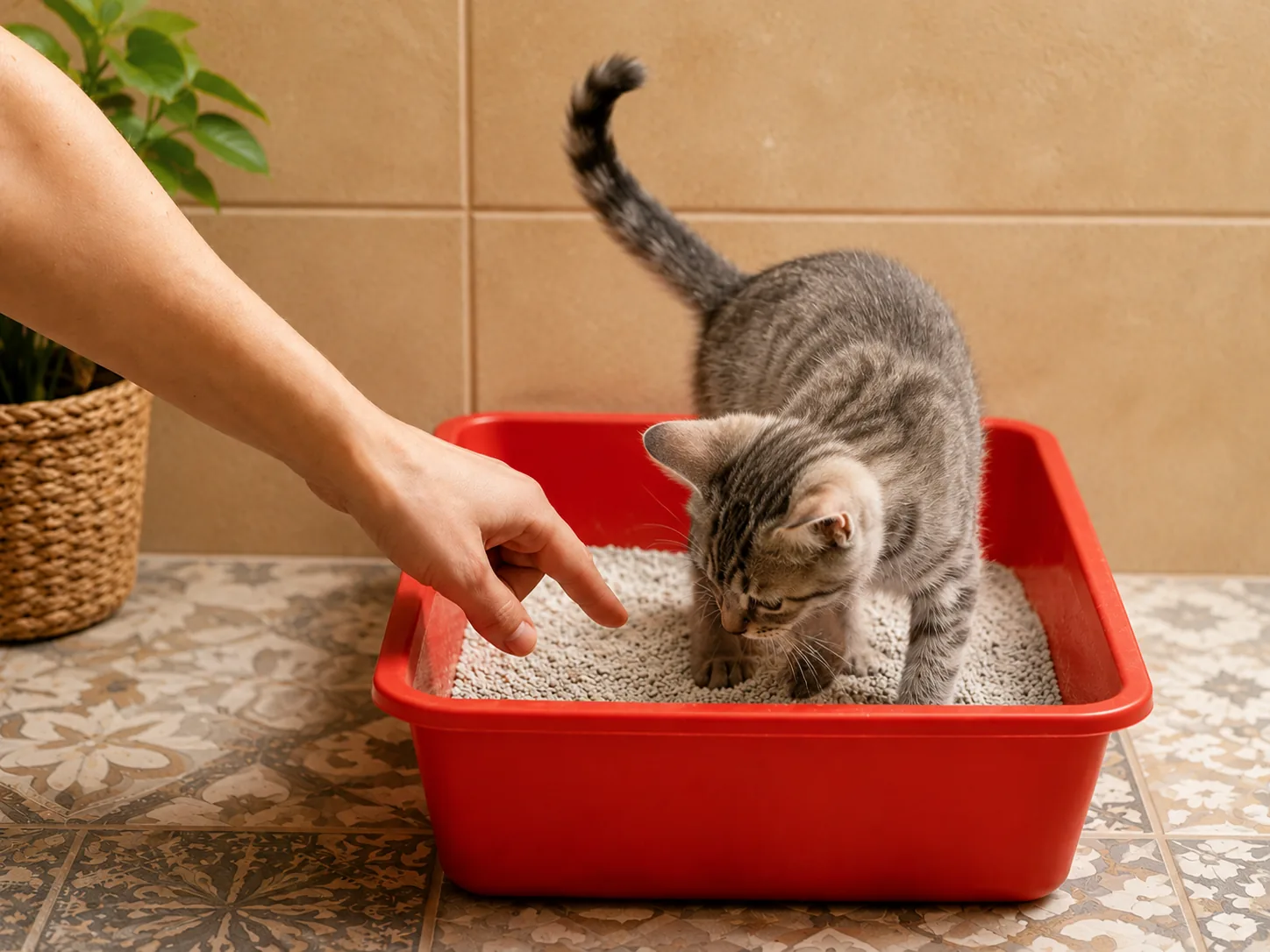
- Place them gently inside and let them sniff and explore. Avoid forcing their paws into the litter.
- Watch for cues: sniffing around, circling, or crouching usually means it’s time to go. Gently place your kitten in the box when you notice these signs.
- Repeat after key moments: after meals, naps, and play sessions are prime times to guide your kitten to the box.
Step 5: Reinforce Good Habits
Positive reinforcement goes a long way with kittens.
- Praise calmly or offer a small treat after a successful trip to the box, without overwhelming them.
- Never punish accidents. Scolding or rubbing a kitten’s nose in a mistake creates fear and anxiety, which can actually make litter box problems worse.
- Clean accidents immediately with an enzymatic cleaner to fully remove the scent — otherwise, your kitten may return to that same spot.
Step 6: Keep the Litter Box Clean
Cats are famously clean animals and are quick to reject a dirty box.
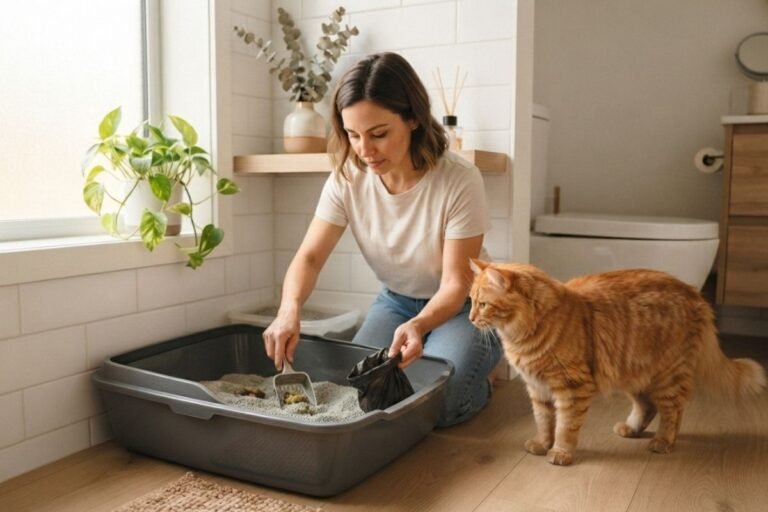
- Scoop daily to remove waste and clumps.
- Fully replace litter and wash the box with mild soap on a regular basis (weekly for clumping litter, more often for non-clumping).
- A dirty box is one of the top reasons kittens start eliminating outside of it, so consistency here prevents most problems before they start.
Troubleshooting Common Litter Training Issues
My kitten is avoiding the litter box. Check for a dirty box, an uncomfortable litter texture, or a location that feels exposed or noisy. Try relocating the box or switching litter types.
My kitten is going right next to the box instead of inside it. This often means the box feels too small, too tall, or the litter depth isn’t right. Try a shallower box with about two inches of litter.
My kitten had an accident on soft surfaces like rugs or bedding. This can be a sign your kitten prefers a different litter texture. Some kittens gravitate toward soft surfaces because the litter feels uncomfortable underfoot.
There are multiple cats and one is guarding the box. Territorial behavior between cats can block access to the box. This is where the “one box per cat plus one extra” rule becomes especially important.
When to Talk to a Vet
If a kitten who was previously litter trained suddenly starts having frequent accidents, it’s worth ruling out medical causes such as a urinary tract infection or digestive upset, especially if you notice straining, unusual frequency, or blood in the urine. Behavioral causes are common, but sudden changes are always worth a vet visit to rule out health issues first.
Final Thoughts
Litter training a kitten is largely about setting up the right environment and letting natural instinct take over. With a properly sized box, the right litter, a good location, and a little positive reinforcement, most kittens pick up the habit within a few days to a week. Stay patient, keep the box clean, and avoid punishment — and you’ll likely have a fully litter-trained kitten before you know it.