
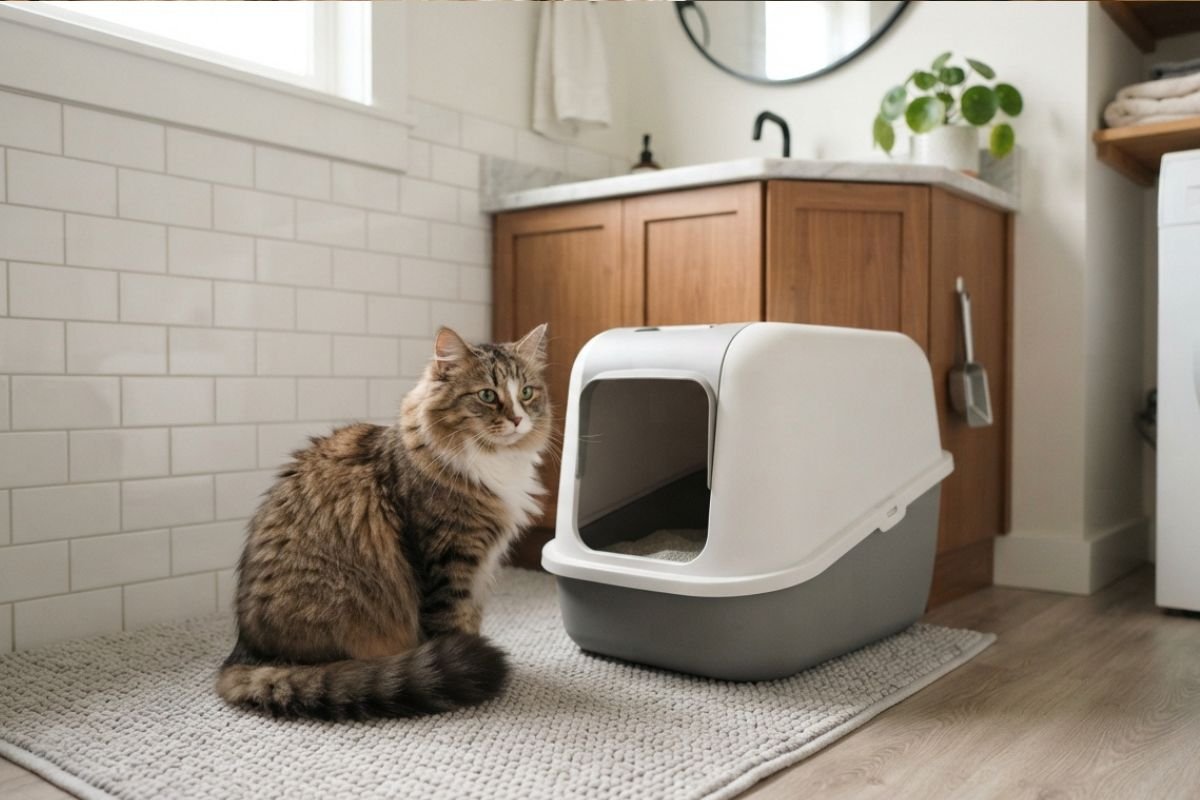
Why Does My Cat Keep Missing the Litter Box?
If you’ve been finding puddles or piles just outside the litter box instead of inside it, you’re dealing with one of the most common — and most frustrating — issues cat owners face. The good news: this behavior almost always has a clear cause, and once you identify it, the fix is usually straightforward.
It’s Rarely About “Bad Behavior”
Cats are naturally clean animals with a strong instinct to bury their waste. When a cat consistently misses the box, it’s not being spiteful or lazy — it’s responding to something in its environment, health, or the box itself that isn’t working for it. Understanding the root cause is the key to solving the problem for good.
Common Reasons Cats Miss the Litter Box
1. The Box Is Too Small
Many commercial litter boxes are simply undersized for adult cats. As a general rule, the box should be at least one and a half times the length of your cat from nose to tail. A cramped box makes it hard for your cat to turn, dig, and position itself properly, which often leads to accidents right at the edge.
2. Litter Depth or Type Issues
Cats prefer soft, diggable litter about two inches deep. Too little litter makes digging difficult, while certain textures or scents (especially heavily perfumed litters) can be off-putting to sensitive paws and noses. If you’ve recently switched brands, that change alone could be the culprit.
3. A Dirty Box
Cats are far more particular about cleanliness than most people realize. A box that isn’t scooped daily can quickly become unappealing, prompting your cat to look for a cleaner spot nearby — often just outside the box.
4. Box Placement
Location matters more than most owners expect. Boxes placed in high-traffic, noisy, or hard-to-reach areas can cause a cat to hesitate or rush, leading to poor aim. Cats also strongly prefer having some privacy and multiple escape routes, so a box wedged into a tight corner can create stress.
5. Not Enough Boxes
The standard guideline is one litter box per cat, plus one extra. In multi-cat households, competition or territorial tension over a single box can push a less dominant cat to eliminate nearby instead of inside it.
6. Covered Boxes and Trapped Odor
While covered boxes may look tidier to us, they trap odors inside, which can make the box unpleasant for a cat with a sensitive nose. Some cats also feel confined or anxious in an enclosed space, especially if there’s only one entry point.
7. Medical Issues
If the missed litter box is a new or sudden behavior, a vet visit should be your first step. Conditions such as urinary tract infections, bladder stones, kidney disease, or arthritis (which makes climbing into a high-sided box painful) can all cause a cat to eliminate just outside the box. Ruling out medical causes early prevents the problem from becoming a learned habit.
8. Stress and Environmental Changes
Cats are highly sensitive to change. A new pet, a move, rearranged furniture, or even a new litter box brand can trigger stress-related elimination issues. Cats may also associate the box with a negative experience (like being startled while using it) and start avoiding it.
How to Fix the Problem
- Rule out medical causes first. A vet check is essential, especially with sudden changes in behavior.
- Upgrade the box size. Bigger is almost always better.
- Scoop at least once daily and do a full litter change regularly.
- Follow the “n+1” rule for multiple cats, placing boxes in different locations.
- Choose unscented, fine-grained clumping litter unless your cat shows a clear preference otherwise.
- Relocate boxes to quiet, low-traffic areas with easy access.
- Consider a low-sided or uncovered box, particularly for senior cats or kittens.
- Add a litter mat nearby to catch stray litter and reduce tracking, which can sometimes mask the actual missing issue.
When to See a Vet
If the behavior appears suddenly, is accompanied by straining, crying while urinating, blood in the urine, or a noticeable change in frequency, treat it as urgent. These can be signs of a urinary blockage, particularly in male cats, which is a medical emergency.
Final Thoughts
A cat that keeps missing the litter box is communicating that something isn’t right — whether it’s the box itself, its location, or an underlying health issue. By systematically ruling out these common causes, most owners can resolve the problem within a few weeks and restore peace to the litter box routine.