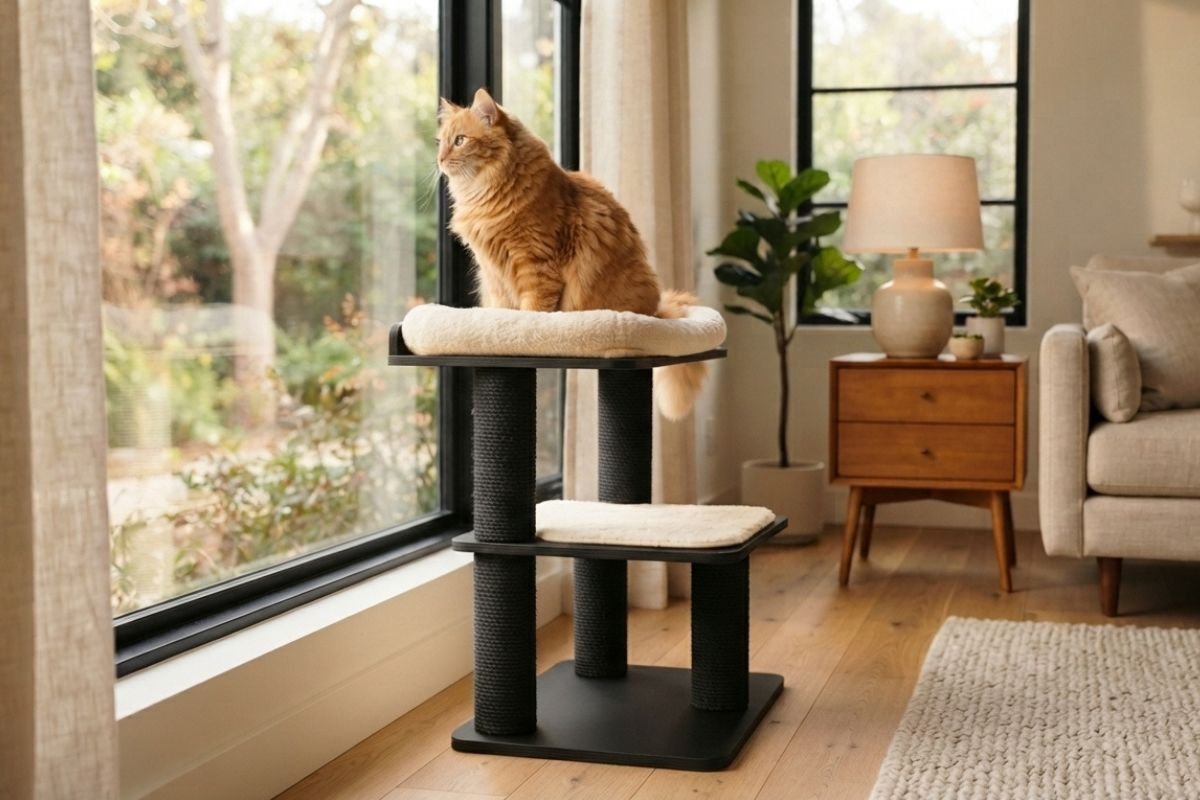
Why Every Cat Needs a Cat Tree at Home: The Complete Guide
If you share your home with a cat, you’ve probably noticed her jumping on shelves, scratching the couch, or perching on top of the fridge. This isn’t random behavior — it’s instinct.
Cats are natural climbers, and giving them a dedicated cat tree isn’t just a nice extra; it’s one of the most important investments you can make for their physical and mental wellbeing. In this guide, we’ll break down exactly why cat trees matter and how to choose the right one for your home.
What Is a Cat Tree?
A cat tree (also called a cat tower or cat condo) is a piece of furniture designed specifically for cats, usually featuring multiple platforms, scratching posts, hiding cubbies, and dangling toys. They range from simple two-level towers to elaborate multi-story structures that mimic a cat’s natural outdoor environment.
Why Cat Trees Matter: The Core Benefits
1. They Satisfy a Cat’s Natural Instinct to Climb
In the wild, cats climb trees to hunt, escape predators, and survey their territory from a safe vantage point. Domestic cats retain this instinct even though they live indoors. A cat tree gives your cat a safe, appropriate outlet for climbing instead of your bookshelves, curtains, or kitchen counters.
2. Vertical Territory Reduces Stress
Cats feel more secure when they can observe their surroundings from above. Height represents safety and control in feline psychology. Multi-cat households especially benefit from vertical space, since it allows cats to establish separate territories without direct confrontation, reducing tension and aggressive behavior.
3. Built-In Scratching Surfaces Protect Your Furniture
Most cat trees include sisal rope or corrugated cardboard scratching posts. Scratching isn’t destructive behavior for its own sake — it’s how cats maintain claw health, mark territory through scent glands in their paws, and stretch their muscles. A quality cat tree redirects this instinct away from your sofa and toward a surface designed for it.
4. Mental and Physical Stimulation
Indoor cats can easily become bored or sedentary, which contributes to obesity and behavioral issues. Climbing, jumping, and exploring different levels of a cat tree provide low-impact exercise and mental engagement, helping keep your cat active throughout the day.
5. A Safe Retreat and Personal Space
Enclosed cubbies and hammocks built into many cat trees give cats a private space to retreat to when they feel anxious, overstimulated, or simply want alone time. This is especially valuable in households with children, dogs, or frequent visitors.
6. Better Sleep Quality
Cats sleep between 12 and 16 hours a day, and they instinctively prefer elevated, cozy spots. A well-placed cat tree near a window gives your cat a comfortable perch for both sunbathing and watching outdoor activity — a favorite form of feline entertainment.
How to Choose the Right Cat Tree
- Stability first: Look for a wide, sturdy base, especially for larger cats or multi-cat homes.
- Height and levels: Taller trees with multiple platforms offer more enrichment, but should suit your ceiling height and room layout.
- Material quality: Sisal rope scratching posts tend to outlast carpet-wrapped ones.
- Placement: Position it near a window for natural light and outdoor views, or in a common area where your cat can stay close to family activity.
- Number of cats: Multi-cat households generally need larger trees or multiple trees to prevent competition over space.
Final Thoughts
A cat tree isn’t just a piece of furniture — it’s an essential tool for supporting your cat’s instincts, reducing stress, protecting your home, and improving overall quality of life. Whether you have a playful kitten or a senior cat who prefers to nap in a high, quiet corner, the right cat tree can make a lasting difference in how comfortable and content your cat feels at home.